Have Questions? We’re Here to Help!
Discover more about improving facility performance while reducing costs.

As you likely know, regular evaluation of your facility assets, such as roofing and pavement, is the cornerstone of effective facilities management. Having accurate, timely data about the condition of these assets is essential for prioritizing projects, designing repairs or replacements, and planning long-term capital investments. Without a clear understanding of asset inventory and health, organizations risk unexpected failures, spending money on the wrong work, and missing opportunities to extend the life of critical infrastructure.
Regular assessments inform building operators on maintenance, repair, and replacement decisions at the building level and provide context for portfolio-wide facility asset management strategies. They’re an important tool for organizations that want to allocate resources effectively, forecast long-term capital expenditures, and ensure that repairs and replacements are performed at the optimal time while maintaining warranties.
However, as technology has evolved, techniques for gathering this vital data have expanded to include both drone-based and on-site surveys. Each offers advantages and disadvantages... and can be used in concert.
In recent years, drone surveys have become both viable and popular for facility assessments, especially for large or complex sites. This method can deliver fast, cost-effective, and safe data collection, often with minimal disruption to operations.
Drones can capture high-resolution visual data across expansive or hard-to-reach areas, making them an efficient choice for routine documentation and initial assessments.
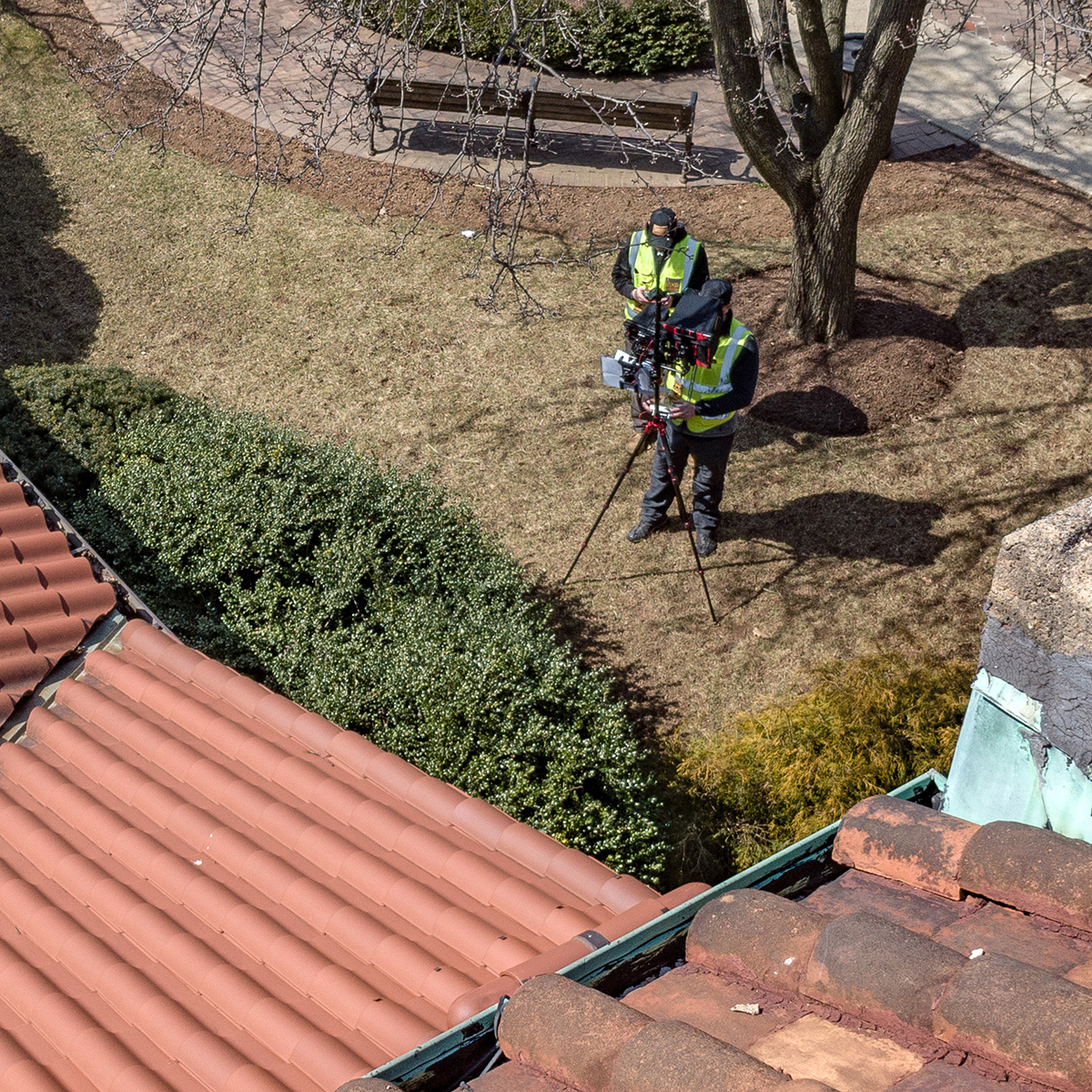
On the other hand, on-site surveys, conducted by skilled technicians, are best for a true, in-depth asset evaluation and provide a level of insight that is difficult to match with remote methods.
Having a seasoned eye on a site can reveal hidden issues or details that a drone operator may miss.
Additionally, a technician can perform preventive maintenance, such as cleaning up debris or addressing minor defects, thereby adding even more value to the process.
You’ll want a real human on site when asset longevity, project prioritization, and ensuring compliance with warranty requirements are paramount.
Evaluation Criteria | Drone Surveys | On-Site Surveys |
Speed of Data Capture | Very fast | Slower, but more detailed |
Cost | Lower for large sites | Higher due to labor/time |
Defect Identification | Surface-level only | Detailed, includes hidden |
Moisture Analysis | Possible, extra cost | Standard, precise |
Scheduling | Easy, but weather/FAA limits | Requires coordination, resilient |
Preventative Maintenance | Not included | Often performed during a visit |
Warranty Compliance | Not included unless approved | Required by manufacturers |
Steep Slope/Tile Roof Access | Easily accessible | Risky/inaccessible for humans |
Report Detail | Moderate | High, actionable |
Inventory Capture | Good visuals | Best with physical verification |
Leak Investigation | Not included | Often performed |
Life-Safety Issue ID | Obvious damage only | Comprehensive, root-cause |
Defect Depths | Not measurable | Accurately measured |
Asset Management Plan (AMP) Conversion | Improving via APIs | Fast, accurate integration |
High ERSL Asset Insight | Moderate | More accurate, site-specific |
Drones can be the right-sized solution when speed, safety, and cost are top of mind. For organizations managing large campuses or portfolios with many facilities, drones offer rapid, high-level assessments, enabling them to prioritize where more detailed follow-up is needed. They are especially useful for capturing routine inventory data and accessing areas that would otherwise be unsafe or pose logistical challenges for humans.
For deeper insight, moisture analysis, or warranty compliance, a seasoned technician will provide more value. Having a trained professional on site is the best way to gain a comprehensive understanding of asset condition, especially when the stakes are high, such as with aging assets, suspected leaks, or before major capital investments. While they require more time and resources, the long-term value of precise diagnostics and hands-on expertise often outweighs the initial investment, especially for critical or high-value assets.
In practice, taking a hybrid approach that leverages drone surveys to quickly capture initial data or across a large portfolio, followed by on-site surveys for facilities that warrant closer inspection, can be an effective strategy. This combination maximizes the strengths of both methods, delivering comprehensive data while optimizing costs and supporting a proactive, data-driven asset management strategy.
Drone and on-site surveys are not mutually exclusive; rather, they complement each other. Understanding your assessment goals, operational priorities, and long-term strategy should guide your decision on which route to take. That said, an expert like Mantis helps you get clear on the assessment tools in your toolkit so you can make the best operational and financial decisions in both the short and long term.
Contact us today to discover which survey approach best suits your organization (and when!)
Q: When should organizations choose a drone survey for facility assessments?
A: Drone surveys are best when speed, safety, and cost efficiency are the priority. They allow teams to quickly capture high‑resolution imagery across large or hard‑to‑access areas, making them ideal for initial assessments, routine documentation, and early-stage portfolio reviews.
Q: What advantages do on‑site surveys offer over drone surveys?
A: On‑site surveys provide deeper diagnostic insight because trained technicians can identify hidden defects, perform precise moisture analysis, carry out preventive maintenance, and ensure compliance with warranty requirements—capabilities that drones alone can’t match.
Q: Is a combined drone and on‑site survey approach valuable?
A: Yes. A hybrid strategy leverages the speed of drone assessments for broad data capture while using on‑site technicians for detailed follow‑up, creating a more efficient, cost‑effective, and comprehensive asset management process.
Discover more about improving facility performance while reducing costs.